
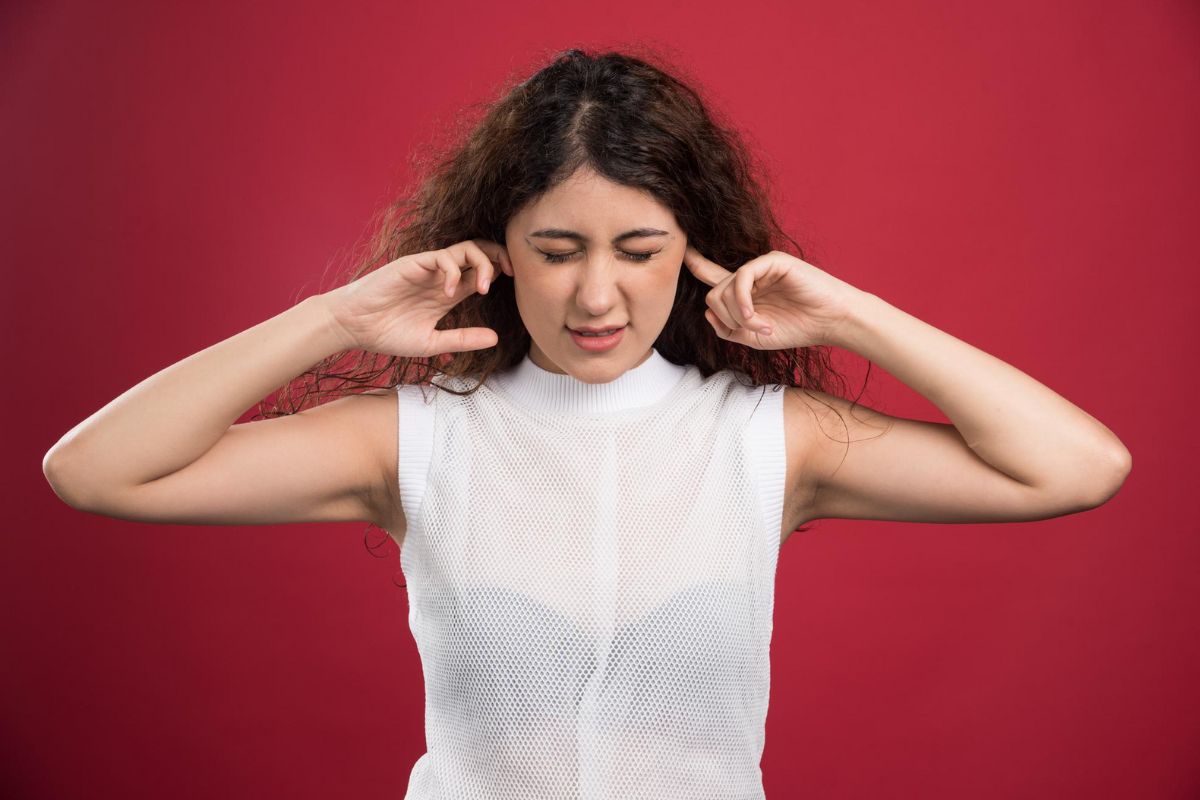
Photo Credit: Freepik.com
The Hidden Toll of Noise on Mental Health: Why Children and Adolescents are Most at Risk
By Krupa Abraham and Urveez Kakalia
Noise is more than an unpleasant background-it is an environmental stressor that affects our bodies and minds in ways we often underestimate. Research shows that continuous noise exposure not only harms hearing but also contributes to stress, sleep disturbances, cardiovascular strain, and poor mental health. While adults are significantly affected, children and adolescents remain especially vulnerable due to their limited coping mechanisms.
How Noise Affects Mental Health:
The brain is wired to stay alert to sounds as a signal of danger. Prolonged noise keeps the stress-response system activated, leading to irritability, anxiety, or even symptoms of depression. For example, children living in noisy neighbourhoods often report more stress and fatigue compared to peers in quieter areas.
Noise at night interrupts both the depth and quality of sleep. Even low-level sounds can reduce restorative rapid eye movement (REM) sleep, leaving children tired, irritable, and unable to focus in school. Lack of good sleep, in turn, impacts academic performance and emotional regulation.
The Role of Noise Sensitivity:
Not everyone reacts to noise in the same way. Noise sensitivity- a trait reflecting how strongly someone perceives and responds to sound-can intensify the impact of noise on mental health. For instance, highly noise-sensitive children may show higher blood pressure or anxiety symptoms, even if noise exposure levels are moderate. Studies suggest that noise sensitivity itself may be a stronger predictor of health outcomes than noise levels alone.
Why Children are More Vulnerable:
Children and adolescents are still developing emotionally and neurologically. Environmental stressors like noise can interfere with concentration, speech development, and social skills. Imagine a child trying to read while constant traffic noise hums outside the classroom window. Over time, this can erode confidence, increase frustration, and create long-term learning difficulties.
Socio-economic Factors in Noise Exposure:
Noise pollution disproportionately affects low-income families. For example, families living near highways or construction-heavy neighborhoods are exposed to higher levels of noise with fewer options to mitigate it. This imbalance means that children in these environments carry an unfair burden of health risks, from emotional distress to sleep disorders.
Taking Control: Small Changes That Help
Simple steps can reduce the impact of noise:
1. Soundproofing with curtains, carpets, or insulation .
2. Quiet time rituals, such as reading or puzzles, without background noise.
3. Ear protection in unavoidable loud environments.
4. Mindful device use by lowering volume or reducing background TV/music.
These strategies may not eliminate noise completely, but can create meaningful relief, especially for children.
When to Seek Professional Support:
Sometimes, the psychological effects of noise go beyond lifestyle changes. Persistent stress, anxiety, or sleep issues may signal the need for professional help. At ImPerfect Psychotherapy, we work with children, adolescents, and families to understand how environmental stressors like noise impact mental health. Through therapy, children can learn healthy coping mechanisms, and families can discover ways to build resilience together. Silence is not just the absence of noise- it is space for the mind to heal. As we move through increasingly noisy worlds, how often are we giving ourselves and our children the gift of quiet?
Reference:
1. https://pmc.ncbi.nlm.nih.gov/articles/PMC6301087/
2. https://www.medicalnewstoday.com/articles/noise-pollution-health-effects
3. https://magazine.hms.harvard.edu/articles/noise-and-health
Further Reading:
Guha, M. (2022). Noise pollution and mental health. Journal of Mental Health, 31(5), 605-606.
Newbury, J. B., Heron, J., Kirkbride, J. B., Fisher, H. L., Bakolis, I., Boyd, A., … & Zammit, S. (2024). Air and noise pollution exposure in early life and mental health from adolescence to young adulthood. JAMA Network Open, 7(5), e2412169-e2412169.
Bronzaft, A. L. (2002). Noise pollution: A hazard to physical and mental well-being. Handbook of environmental psychology, 499-510.