
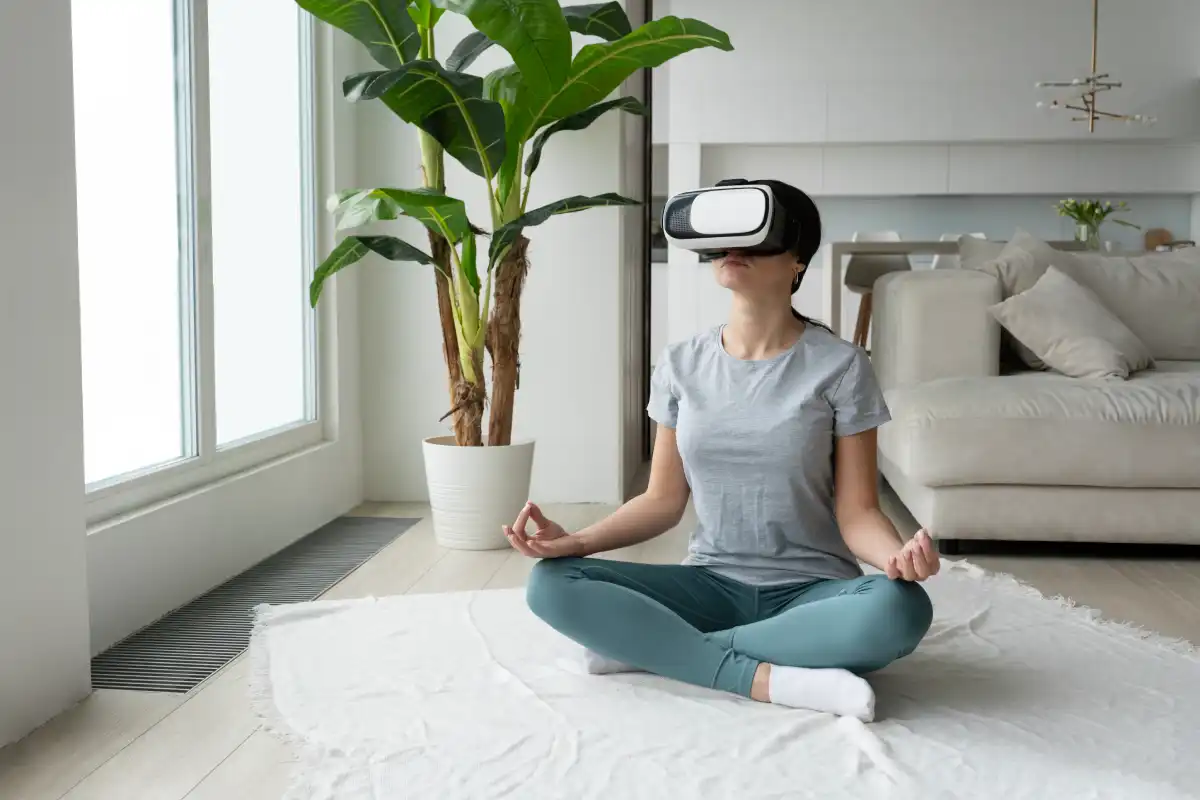
Photo Credit: Freepik.com
The Human Side of Healing: Why Technology should Support, Not Replace, Psychotherapy
In our last article, we saw therapy and AI come together. Technology can support mental health – But can it replace a Therapist?
Artificial Intelligence is rapidly changing the way people seek information, communicate, and manage everyday challenges. Increasingly, individuals are also turning to AI chatbots for emotional support, reassurance, and guidance. Their accessibility, convenience, and 24/7 availability can make them appealing , particularly to people experiencing loneliness, stress, or uncertainty.
However, mental health care is far more complex than providing information or generating comforting responses. Psychotherapy is fundamentally a human and relational process built on trust, empathy, clinical understanding, and genuine emotional connection.. AI may simulate these qualities through language, but it cannot truly experience or understand human emotions.
The illusion of Empathy
AI can respond with words that sound compassionate and validating. Yet therapeutic empathy involves much more than language. A trained therapist observes tone, silence, body language, emotional shifts, patterns of behaviour, and the meaning behind what a person communicates.
A therapist can also recognise when a client’s words may not fully express what they are experiencing. This human achievement is particularly important when working with trauma, relationship difficulties, severe distress, or complex psychological concerns.
Being hard is important but being genuinely understood is transformative.
The clinical Risks of Relying On AI
AI systems generate responses based on patterns in data rather than clinical responsibility or professional judgement. They may provide inaccurate information, overlook important psychological factors, or offer advice that is inappropriate for an individual’s circumstances.
Mental health assessment requires consideration of a person’s history, relationships, culture, environment, behaviour, and emotional functioning. In situations involving significant psychological distress or safety concerns, professional assessment and timely human intervention are especially important.
AI also raises important questions regarding privacy, confidentiality, ethical responsibility, and accountability. A licensed mental health professional operates within established professional operates within established professional and ethical standards, whereas responsibility for an AI-generated response can be considerably less clear.
AI as a Tool, Not a Replacement
This does not mean technology has no place in mental healthcare. AI may be useful for psychoeducation, journaling prompts, mood tracking, organising thoughts, or learning basic coping strategies. Used responsibly, technology can complement professional support and potentially make mental health resources more accessible.
The key distinction is Augmentation rather than Replacement. Technology can provide information. therapy provides a relationship.
Why Human Psychotherapy Matters
Psychotherapy offers a safe space where individuals can explore difficult emotions, recognise unhealthy patterns, develop self – awareness, and work towards meaningful change. A therapist does not simply tell a person what they want to hear. Therapy can gently challenge unhelpful beliefs, encourage accountability and help individuals understand themselves within the context of their relationships and life experiences.
At ImPerfect, therapy is centred on this human connection. The focus is not merely on managing symptoms, but on understanding the individual behind those symptoms – their emotions, experiences, relationships, struggles and strengths.
The future of Mental Healthcare
The future need not be AI Versus human therapists. It can be technology working alongside human expertise.
AI may become an increasingly valuable support tool, but psychological healing requires sympathy, ethical responsibility, clinical judgement and genuine human presence. Because technology can respond to our words- but healing begins when we feel truly seen First, understood and supported.
By Sheeba Prakash and Urveez Kakalia
References
https://www.bftherapy.ca/understanding-risks-of-ai-therapy
For further Reading
Castelnuovo, G., Gaggioli, A., Mantovani, F., & Riva, G. (2003). New and old tools in psychotherapy: The use of technology for the integration of the traditional clinical treatments. Psychotherapy: theory, research, practice, training, 40(1-2), 33.
Lin, B. (2024). The Machine Can’t Replace the Human Heart. arXiv preprint arXiv:2402.18826.
Roesler, C. (2017). Tele‐analysis: The use of media technology in psychotherapy and its impact on the therapeutic relationship. Journal of Analytical Psychology, 62(3), 372-394.