
Photo Credit: Freepik.com
Understanding Neurofeedback: A Window into the Brain’s Self-Regulation Potential
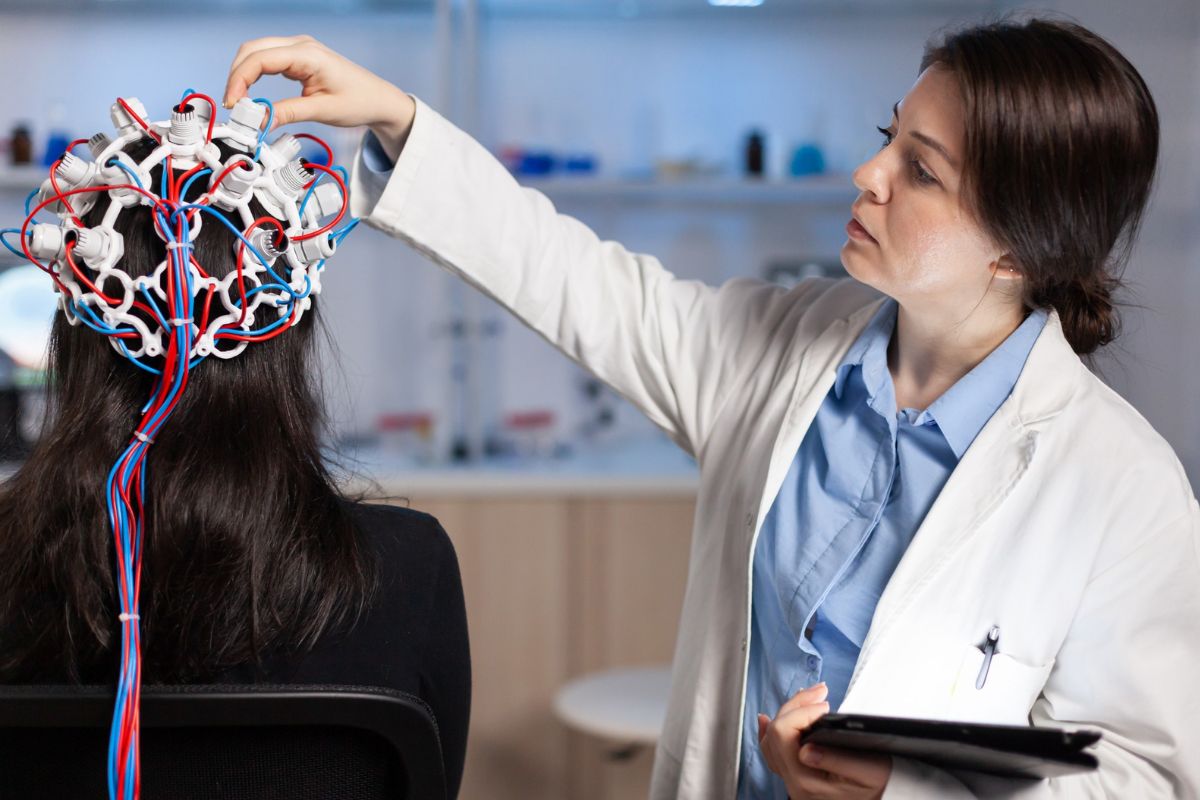
Neurofeedback is a non-invasive technique that uses real-time displays of brain activity-typically via EEG, to help individuals learn to regulate their brain functions. By receiving audio or visual cues tied to desirable or undesirable brainwave patterns, individuals can gradually develop greater control over their mental states.
Although neurofeedback is not new, recent advancements have made it more accessible. While it’s often considered a complementary treatment, its long-term efficacy continues to be debated, as some improvements may take months and may not always last. Still, its potential applications are broad and promising.
Types of Neurofeedback:
1. Frequency/ Power Neurofeedback: This widely used method helps manage ADHD, anxiety and insomnia by altering brainwave amplitudes through surface electrodes.
2. Slow Cortical Potential Neurofeedback (SCP-NF): Helps regulate slow cortical potentials to treat conditions like ADHD and epilepsy.
3. Low-Energy Neurofeedback System (LENS): Involves low electromagnetic signals to address traumatic brain injury, fibromyalgia, and more.
4. Hemoencephalographic (HEG) Neurofeedback: Uses cerebral blood flow as feedback, useful in treating migraines.
5. Live Z-score Neurofeedback: Offers continuous brainwave comparison to a database, especially effective for insomnia.
6. LORETA: Employs multiple electrodes to treat OCD, addictions, and depression through high-resolution brain imaging.
7. fMRI-based Neurofeedback: The most advanced type, targeting deep brain regions using real-time imaging.
Clinical Applications of Neurofeedback:
A. ADHD: ADHD treatment with neurofeedback aims to reduce slow theta waves and increase faster beta waves, leading to improved attention, reduced hyperactivity, and enhanced academic performance.
B. Insomnia: By adjusting brainwave frequencies, neurofeedback can help regulate sleep cycles, aiding individuals who struggle with sleep onset or maintenance.
C. Learning Disorders (Dyslexia, Dyscalculia): Alpha wave training has shown benefits in improving focus and processing in children with learning disorders.
D. Schizophrenia and Autism Spectrum Disorder (ASD): Neurofeedback helps in emotional regulation and social functioning, especially by adjusting abnormal brainwave activity.
E. Addiction Recovery: Reduces cravings and helps regulate brainwaves altered by substance abuse, showing promise in long-term recovery.
F. Performance Enhancement: Athletes, surgeons, and artists use neurofeedback to improve focus, motor control, and performance under pressure.
G. Depression and Anxiety: Training specific brain regions can regulate mood and reduce physiological signs of anxiety like muscle tension.
H. Pain Management: Neurofeedback helps alter how the brain processes pain, leading to a reduction in chronic pain experiences.
Caution and Considerations:
Despite its many uses, neurofeedback is expensive, time-intensive and still lacks universally conclusive evidence. It’s best viewed as a complementary intervention, particularly effective when integrated with traditional therapy. At ImPerfect Psychotherapy, we acknowledge the complexities of brain-based challenges and believe in holistic approaches to mental wellness. What if the ability to regulate your mind was already within you-just waiting to be trained, not tamed?
By Urveez Kakalia and Krupa Abraham
Reference:
1. https://pmc.ncbi.nlm.nih.gov/articles/PMC4892319/
2. Christiansen H., Reh V., Schmidt M. H., Rief W. ( 2014). Slow cortical potential neurofeedback and self-management training in outpatient care for children with ADHD: Study protocol and first preliminary results of a randomized controlled trial. Frontiers Human Neuroscience, 8, 943. doi: 10.3389/fnhum.2014.00943. [DOI] [PMC free article] [PubMed] [Google Scholar]
3. Collura T. F. ( 2000). Practical Issues Concerning EEG Biofeedback Devices, Protocols and Methods (Doctoral Dissertation). Retrieved from http://openeeg.sourceforge.net/arch/att-0944/01-part.
4. Dias A. M., Van Deusen A. M., Oda E., Bonfim M. R. ( 2012). Clinical efficacy of a new automated hemoencephalographic neurofeedback protocol. Spanish Journal of Psychology, 15( 3), 930– 941. [DOI] [PubMed] [Google Scholar]
5. Dempster T. ( 2012). An investigation into the optimum training paradigm for alpha electroencephalographic biofeedback (PhD Thesis). U.K.: Canterbury Christ Church University. [Google Scholar]
6. Edmonds W. A., Tenenbaum G. ( 2011). Case studies in applied psychophysiology: Neurofeedback and biofeedback treatments for advances in human performance. New Jersey: John Wiley & Sons. [Google Scholar]
7. Hurt E., Arnold L. E., Lofthouse N. ( 2014). Quantitative EEG Neurofeedback for the Treatment of Pediatric Attention-Deficit/Hyperactivity Disorder, Autism Spectrum Disorders, Learning Disorders, and Epilepsy. Child and Adolescent Psychiatric Clinics of North America, 23( 3), 465– 486. [DOI] [PubMed] [Google Scholar]
8. Pascual-Marqui R. D., Michel C. M., Lehmann D. ( 1994). Low resolution electromagnetic tomography: a new method for localizing electrical activity in the brain. International Journal of Psychophysiology, 18( 1), 49– 65. [DOI] [PubMed] [Google Scholar]
9. Zandi-Mehran Y., Firoozabadi M., Rostami R. ( 2014). Improvement of Neurofeedback Therapy for Improved Attention Through Facilitation of Brain Activity Using Local Sinusoidal Extremely Low Frequency Magnetic Field Exposure. Clinical EEG and Neuroscience, 46( 2), 100– 12. doi: 10.1177/1550059414524403. [DOI] [PubMed] [Google Scholar]
Further Readings:
Rogala, J., Jurewicz, K., Paluch, K., Kublik, E., Cetnarski, R., & Wróbel, A. (2016). The do’s and don’ts of neurofeedback training: a review of the controlled studies using healthy adults. Frontiers in human neuroscience, 10, 301.
Kohl, S. H., Mehler, D. M., Lührs, M., Thibault, R. T., Konrad, K., & Sorger, B. (2020). The potential of functional near-infrared spectroscopy-based neurofeedback—a systematic review and recommendations for best practice. Frontiers in neuroscience, 14, 594.
Heinrich, H., Gevensleben, H., & Strehl, U. (2007). Annotation: Neurofeedback–train your brain to train behaviour. Journal of Child Psychology and Psychiatry, 48(1), 3-16.