
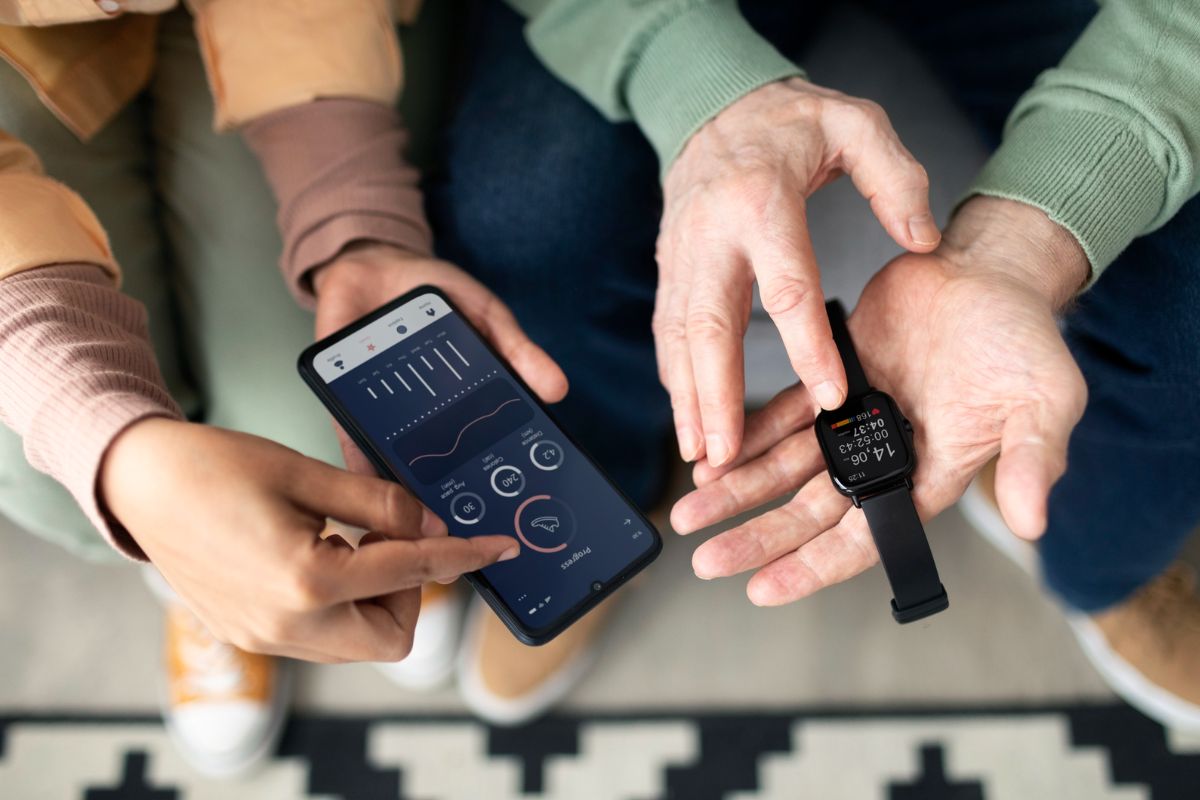
Photo Credit: Freepik.com
Are Health Apps and Wearables Really Working for Everyone?
Health apps and wearables have become household names-tracking steps, reminding us to hydrate, helping us meditate, and even offering therapy prompts. With their sleek design and data-rich features, they promise to revolutionise healthcare and improve both physical and mental well-being. From enhancing patient care to motivating personal wellness goals, these tools seem unstoppable in their potential. But are they truly reaching and working for everyone?
The Invisible Divide: Data Absenteeism
Despite their promise, a deeper look reveals a critical issue: data absenteeism. This term refers to the absence or exclusion of underserved populations by race, class, geography or gender from the health tech revolution. Research shows that those who most need healthcare support are often the least represented in digital health data. For instance, low-income groups may have smartphones but lack reliable internet access or the means to sustain device use over time.
As a result, much of what we know about the effectiveness of wearables and health apps comes from a niche group: young, educated, and well-resourced individuals. That leaves a glaring gap in understanding how these tools can help or fail the rest of the population.
Cultural Context Matters:
Another key consideration is culture. Attitudes toward technology vary widely between countries with individualistic cultures (like the USA) and those with collectivistic or mixed cultures (like China and Singapore). In the USA, tech adoption may be met with scepticism due to historical distrust of institutions. In contrast, societies like China often adopt technology as a communal good, while Singapore’s blended values encourage broad-based tech engagement even among older adults.
These cultural differences affect how people engage with health apps and wearables. What works in one country may not in another, highlighting the need for culturally sensitive design and outreach.
Reaching for Equirt in Health Tech:
From a health equity perspective, the promise of digital health tools can only be realised if they are designed for and tested with diverse populations. That means including lower-income, less educated, and marginalised communities in trials and research. It also means ensuring these tools are accessible, not just in price but in digital literacy and cultural relevance.
A hopeful sign is that people living with mental disorders are just as likely to own smart devices and are open to using them for their health. However, equitable access and tailored support are essential if we want to turn potential into reality. Is innovation really innovation if it leaves people behind?
By Urveez Kakalia and Krupa Abraham
Reference:
1. https://pmc.ncbi.nlm.nih.gov/articles/PMC11088638/
2. https://psycnet.apa.org/record/2025-07948-013
3. https://www.sciencedirect.com/science/article/abs/pii/S0165178121004133
Further Reading:
Lee, E. W., Bao, H., Wu, Y. S., Wang, M. P., Wong, Y. J., & Viswanath, K. (2024). Examining health apps and wearable use in improving physical and mental well-being across US, China, and Singapore. Scientific Reports, 14(1), 10779.
Wulfovich, S., Fiordelli, M., Rivas, H., Concepcion, W., & Wac, K. (2019). “I must try harder”: design implications for mobile apps and wearables contributing to self-efficacy of patients with chronic conditions. Frontiers in psychology, 10, 2388.
Conboy, E., Flood, C., & Power, A. (2018). Exploring Health Anxiety and Dependence in Healthy Adult Users on m-Health Apps and Wearables. In Cyberpsychology and society (pp. 34-46). Routledge.